EN 1811 Nickel Release Testing Explained
EN 1811 nickel release testing is a European test method, not a product certificate. It measures how much nickel migrates from an article under conditions that simulate prolonged skin contact and reports the result in micrograms per square centimeter per week. Under EU REACH, that release value is compared with the restriction limit for the article category. The method assesses release, not total nickel content in the alloy.
SGS is a testing, inspection, and certification company. EN 1811 is one test method used to assess nickel release where applicable; it is not a document type issued under SGS. RainSo maintains material documentation for tested items and production batches. For sourcing decisions, the relevant question is whether the evidence describes the exact item, finish, and order details. A file is useful only when its report terms line up with the SKU or order details.
What EN 1811 Nickel Release Testing Actually Measures
EN 1811 simulates sweat contact. A sample is placed in a prepared solution for a defined period, and the nickel that migrates into the solution is measured. It is not a composition test; it does not report the percentage of nickel in a metal alloy.
An alloy can contain nickel while releasing very little. A coating may look acceptable on paper yet fail once it wears or is damaged. The method captures release risk from the surface and near-surface condition of the article, including plating, coating, and base metal exposure.
Because the method is condition-specific, the report scope is too. A report for one stainless steel bracelet sample may not extend to a different plating color, earring post, finding, or later production run.
Why This Standard Matters for Jewelry Sourcing
Retail buyers and importers use EN 1811 evidence to reduce regulatory risk in the EU and in markets aligned with EU-style nickel release rules. A missing or mismatched report can slow a shipment, block a listing, or force expensive retesting.
RainSo serves B2B buyers sourcing bracelets, rings, necklaces, earrings, and anklets. Current published material families include 316L stainless steel, copper, titanium, and ceramic. EN 1811 nickel release testing matters most often for metal parts, but surface treatment and findings affect the wider assortment.
Ceramic is the current published non-metal material label. It is not automatically exempt from documentation simply because it is non-metal. Component mix, metal inlays, magnets, clasps, and earring posts can all change the applicable test scope.
SGS Report Scope and Limits
The compliance file includes SGS test reports and EN 1811-related material evidence. They do not cover every SKU, production batch, or sample. A report describes a specific tested item and test conditions; the right file must be matched to what is actually being ordered. SGS issues reports; EN 1811 is a test method referenced inside a report.
A usable SGS report identifies the test standard, sample description, material or component tested, test result, and any condition or limitation. Check product name, material, finish, and production details against the report. If material, plating, component source, surface condition, or production process has changed since the test, the existing evidence may need a fresh review.
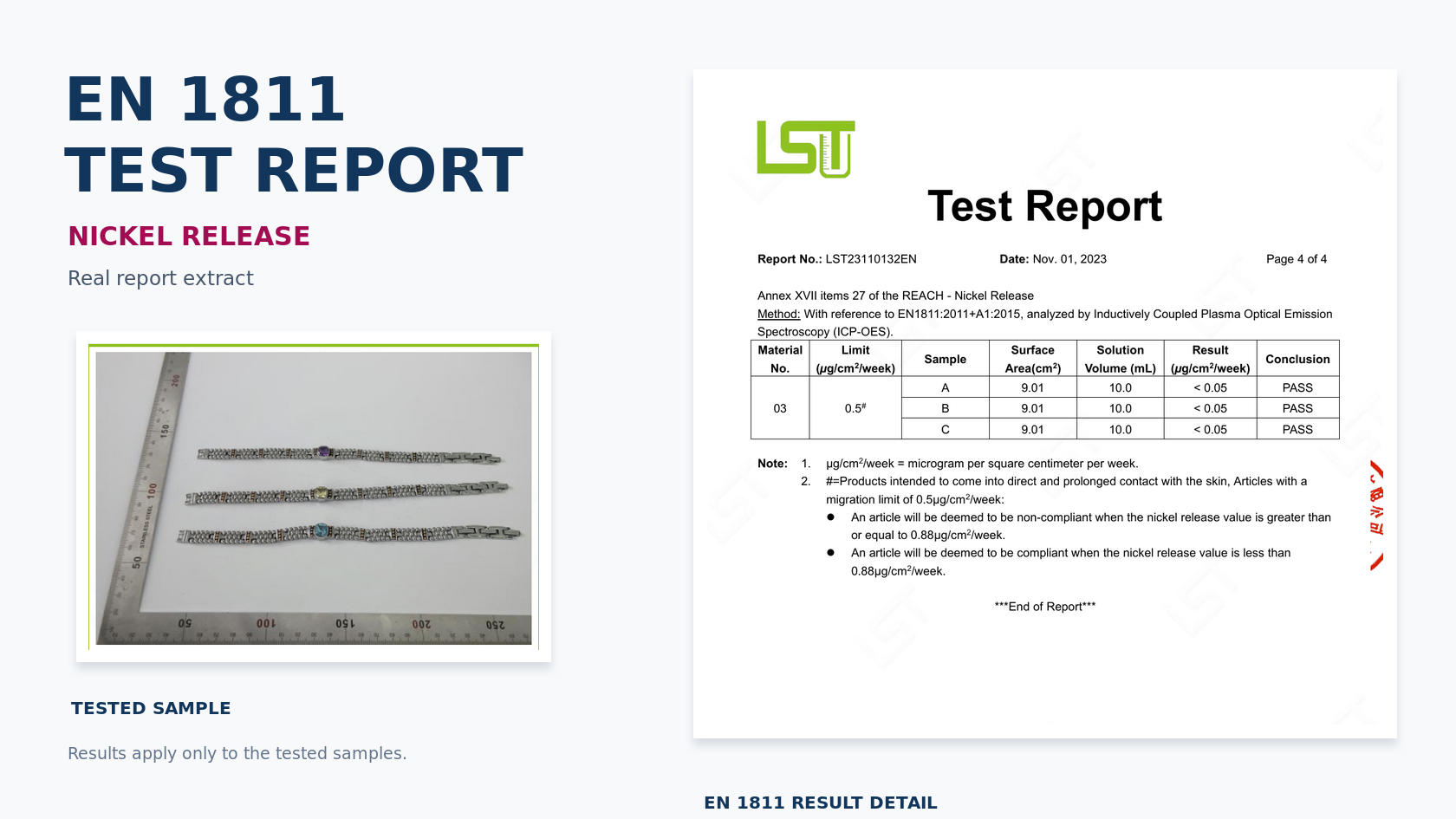
When a document does not match the ordered item, ask for a project-specific check instead of relying on an older or similar file. The team can confirm what exists for the production details you provide.
How REACH and California Proposition 65 Connect
The EU nickel restriction sits within REACH, specifically in the restriction list. EN 1811 is one test method used to assess nickel release under that restriction. Other standards or scope rules can apply depending on article type and market. The ECHA REACH overview provides the regulatory context.
California Proposition 65 is a separate US right-to-know framework administered by OEHHA. It may require warnings for listed chemicals, including certain nickel-related substances, depending on exposure. It does not replace REACH or EN 1811. Products aimed at both the EU and California may need separate evaluation under the two regimes. The California OEHHA Proposition 65 page is the official starting point.
Documentation that may be relevant can be discussed, but final compliance decisions belong to the buyer and the buyer’s compliance counsel. Legal advice is not provided.
How to Verify RainSo EN 1811 or SGS Documentation
Send the SKU or project drawing, material, plating or coating if any, and target market. If a batch or lot reference is available, include it so a check can be made on whether an existing report remains representative for the item. The team then checks whether a matching report exists and whether it includes the relevant EN 1811 test scope.
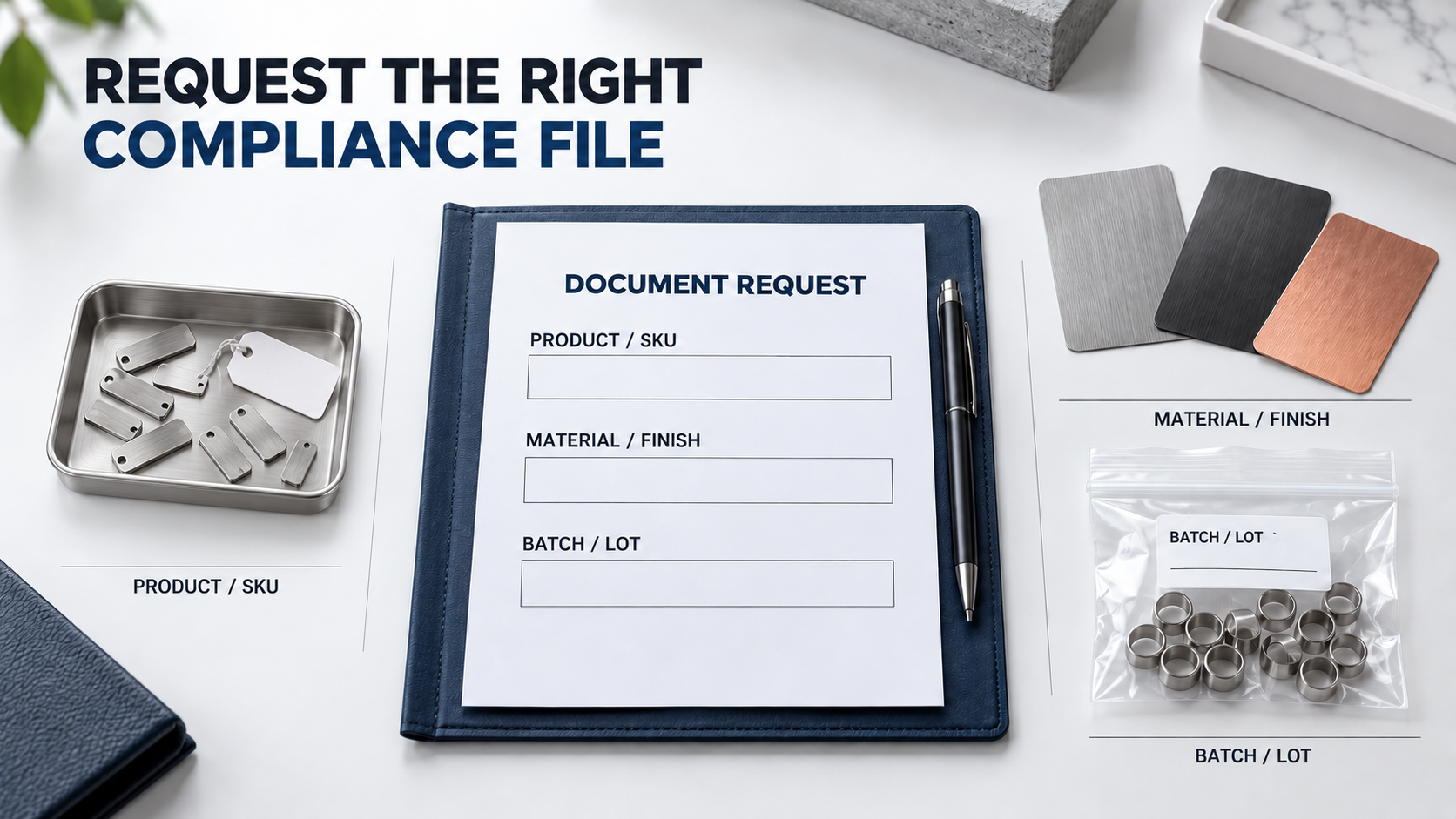
No single certificate covers every product. A matching report is provided only when the test evidence applies to the tested product and material.
For custom projects, materials and surface finishes are set during development. That stage is the time to define the compliance test plan and avoid creating an item that cannot be documented later.
If no current file matches the requested item, options can be reviewed. Depending on the project, the team can advise whether a scoped documentation review, a different material, or a different finish with existing test data would better support the market requirements. RainSo will say whether testing is available for that project or whether the buyer must arrange it separately.
B2B Buying Signals
RainSo is an in-house magnetic jewelry manufacturer and B2B supplier with roughly 20 years of industry experience. Established in 2007, it has a Guangzhou commercial team and production resources in Dongguan. That background matters when traceable material and test documentation are needed, because the supplier must connect the document to production reality.
The published QC process covers material, finish, dimensions, magnet placement, clasp function, structure, and packing where relevant. The current QC article presents incoming material, pre-plating inspection, plating quality, post-assembly inspection, clasp strength, structure recheck, and pre-shipment checks. The RainSo’s QC process gives the production quality view.
Stock wholesale begins at a USD $500 mixed-order minimum. In-stock orders normally dispatch within 3 business days after stock, order details, and payment are settled. For custom work, 48-hour initial CAD direction follows a complete feasible brief. Standard custom samples are generally planned within 30 to 45 days after CAD, material, tooling, and sample requirements are set. Private-label laser logo engraving is free from 100 units when the material, position and artwork are suitable; the exact scope is confirmed in the quotation.
These commercial terms help buyers plan around compliance checks. When EN 1811 evidence is needed before sampling, set the material and SKU early in the sourcing conversation.
Materials and Compliance Pillar
This EN 1811 page sits within the broader materials and compliance guidance. The Materials and compliance pillar covers the full context, and the About RainSo page has supplier background.
When requesting a compliance file, include the exact SKU and finish so the team can retrieve the applicable record.
Common Scoping Mistakes in EN 1811 Discussions
Material tests sometimes get treated as product tests. A 316L stainless steel alloy report may not cover a plated brass finding or a magnet sealed inside a clasp. Older evidence also needs a fresh look if material source or finish has changed. A request for a nickel-free certificate can miss the point when the correct document is a release-test report with defined coverage.
When to Request Documentation in the Sourcing Sequence
For stock orders, check documentation before the order is placed so the available report is understood against the SKU. For custom projects, review it after material and finish direction is set but before sample production is finalized. Private-label laser logo engraving is free from 100 units when the material, position and artwork are suitable. Engraving may remove plating or expose base material, so verify whether the engraving method and location are covered by the applicable EN 1811 or SGS evidence for that item and production condition.
Send the SKU and destination market first; RainSo can then direct the request to the person handling the relevant product file.
Frequently Asked Questions
What is EN 1811 nickel release testing?
EN 1811 uses an artificial sweat solution and controlled contact conditions to measure nickel migration from a sample. The output is a release rate in micrograms per square centimeter per week, which is then compared with the relevant REACH restriction limit. Because the method measures surface release, it does not indicate total nickel percentage in the base alloy.
Does an EN 1811 report mean a product is nickel-free?
No. A passing result means the tested sample stayed at or below the limit under the specified test conditions. EN 1811 measures release, not absence, and the report does not automatically extend to untested variations, later production, or changes in plating and findings.
How can buyers verify RainSo EN 1811 or SGS documentation for a specific product, material, or batch?
Send the exact SKU or project drawing, material, plating or coating, target market, and any batch or lot reference. RainSo checks whether an existing SGS or EN 1811-related report remains representative for that item, including the test date, sample description, and any limitations. A file is provided only when the evidence lines up with what is being bought.
How does EN 1811 relate to REACH and California Proposition 65?
Within REACH, EN 1811 is one test method used to assess nickel release under the applicable restriction; other standards or scope rules may apply depending on article type and market. California Proposition 65 operates under a separate US right-to-know framework with its own warning and listing rules. It does not set the same release limits as REACH, and a product can require review under both systems when it targets both markets.
Which RainSo materials commonly need nickel release documentation?
Metal families such as 316L stainless steel, copper, and titanium often trigger review because findings, plating, rivets, and earring posts can affect release. Ceramic is the current published non-metal material label, but metal inlays or clasps can still introduce nickel exposure. The need for documentation depends on the component’s skin contact and the target market’s rules, not solely on the material family name.
What should a buyer include in an inquiry to get the right compliance file?
Include the SKU or drawing, material, plating or coating, earring post or rivet details where relevant, target market, and known batch or sample reference. Adding a photo or previous report number, if available, can speed up the match. This gives the compliance team enough specificity to retrieve the exact file rather than a general statement.
Request a Scoped EN 1811 Compliance Check
Specify the product, material, finish, and target market for an EN 1811 nickel release review. The team can check the applicable EN 1811 or SGS documentation and confirm what is available for that item. Submit an inquiry and include the product or production details you need to verify.