California Proposition 65 Jewelry Buyer Guide
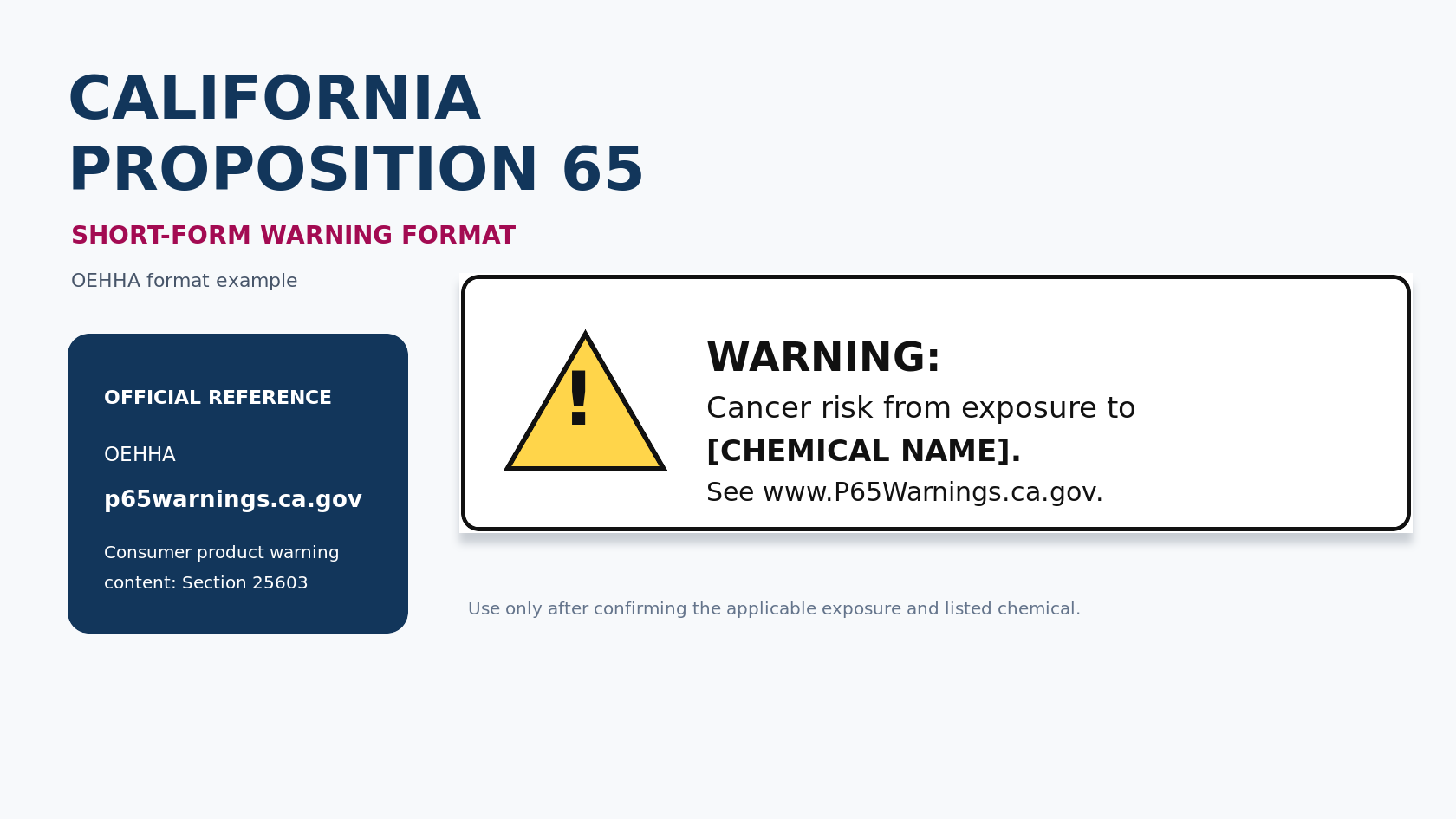
California Proposition 65 requires a business selling into California to give a clear and reasonable warning before exposing consumers to a chemical on the OEHHA list above an applicable threshold. For jewelry buyers, that usually means lead, cadmium, certain nickel compounds, or listed phthalates in a component, plating, or finish. A warning creates a labeling duty; it does not ban the product. A missing warning also does not prove that every piece in a run is compliant. Supplier documentation should describe the product being supplied, then be compared with the California OEHHA Proposition 65 entry for the chemical and exposure route.
What California Proposition 65 means in a jewelry sourcing decision
RainSo treats Proposition 65 as a materials and documentation question rather than a marketing badge. The law creates warning obligations for certain exposures; it does not pre-approve a finished style, a material family, or a supplier. A jewelry buyer still has to determine whether a listed chemical may be present in the exact item and whether the exposure route matters for the buyer’s retail model.
Thresholds under the law are not a simple pass/fail material test. Two visually similar bracelets can carry different obligations because of a clasp alloy, a plating layer, a decorative coating, or a packaging insert. Proposition 65 applies to businesses with 10 or more employees, and the trigger is exposure rather than product category by itself. OEHHA maintains the list of chemicals known to the state to cause cancer, birth defects, or other reproductive harm. Review the current entry for the exact chemical and listing mechanism before requesting documentation.
No single certification covers the catalog. The question is whether the document on file matches the item and its components.
Why a warning is not automatically a defect
Some buyers reject a quote after seeing a Prop 65 warning request. That response can be too broad. A warning may be required when expected exposure to a listed chemical exceeds an applicable safe harbor level, or when the business cannot establish that exposure falls below the relevant level. The item may still be sold in California with the correct label or disclosure, while other markets may not require that warning.
A more useful line of inquiry is what the supplier’s file actually states for the item and its components.
Jewelry components that often trigger Prop 65 review
Common review points include base alloys, solder joints, electroplated finishes, surface coatings, leather or synthetic layers, and flexible components. Lead and cadmium receive the most attention, while certain nickel compounds and some phthalates also appear in jewelry-related enforcement. A clasp, rivet, or decorative inlay can create a different exposure profile than the main body of a bracelet or necklace. Repeated handling, skin contact, and hand-to-mouth routes raise different exposure questions, so the component and how the piece is worn both matter.
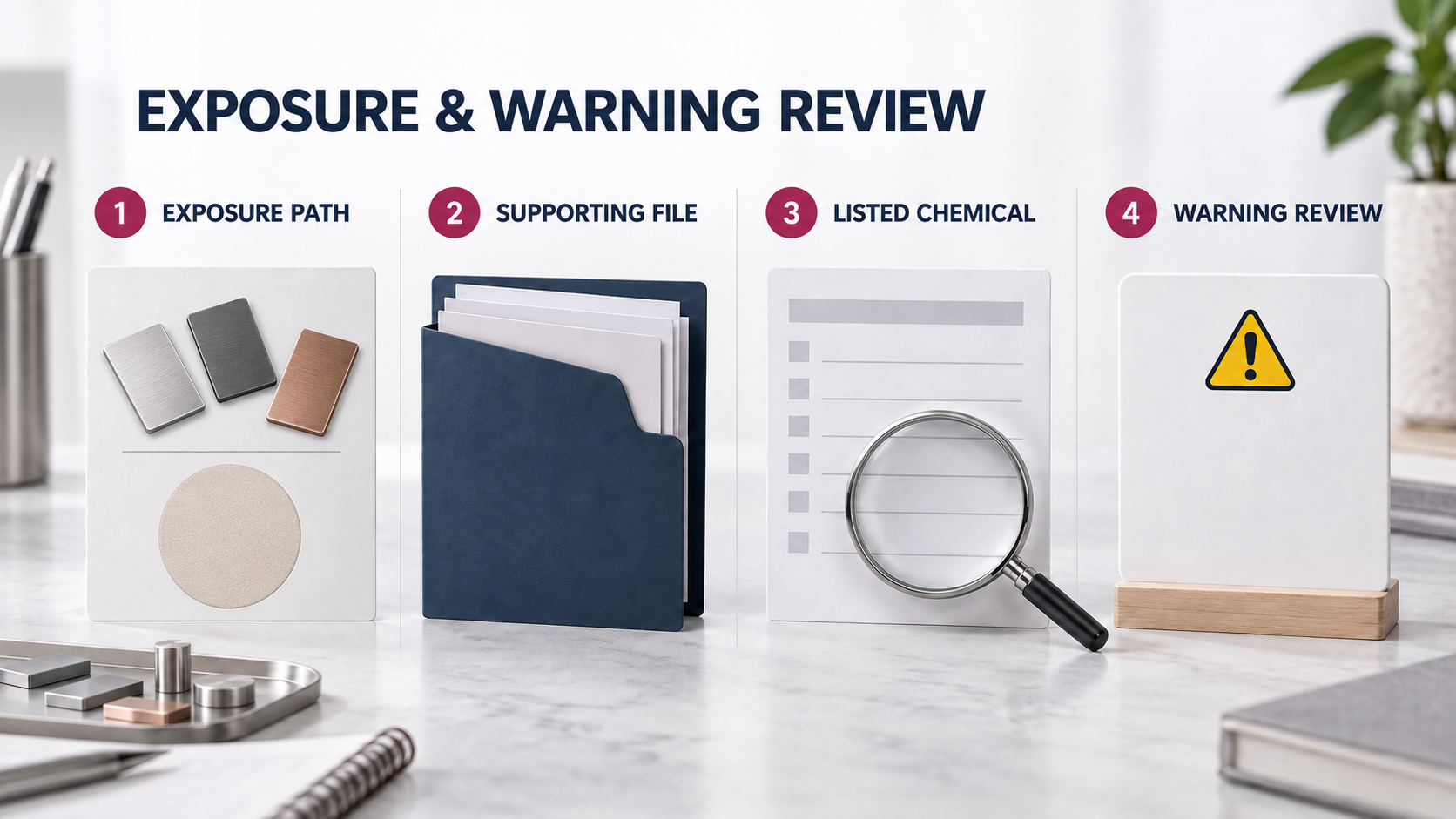
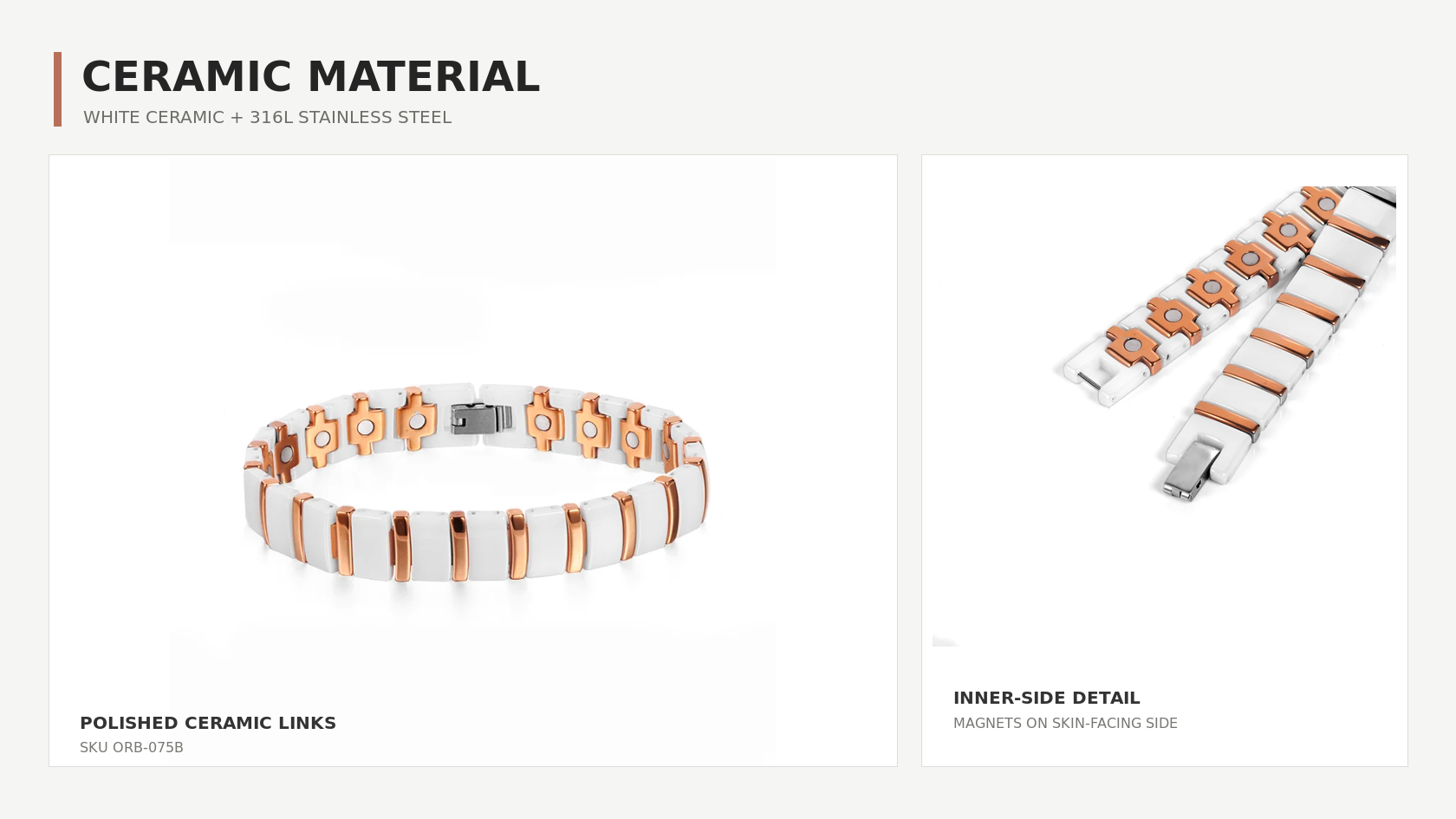
RainSo’s published material families are 316L stainless steel, copper, titanium, and ceramic. Ceramic is the current public non-metal material label. Each family raises its own likely questions, but the actual file still depends on the design and the components used.
Documents to request from a jewelry supplier
Before placing an order, request a short document set matched to the SKU and market. Ask for the following:
- A written statement that ties the document to the exact style, material, components, and production details.
- The supplier declaration or compliance statement for the relevant material or product file.
- Any laboratory report or screening result, such as SGS or equivalent, with the tested item clearly identified.
- EN 1811-related nickel release information when nickel release is relevant to the item.
- The OEHHA listed chemical and exposure route the buyer is checking, so the supplier can confirm whether the file addresses that point.
RainSo keeps REACH and California Proposition 65 as current compliance references. Documents are useful only when they match the applicable order. A report for one copper bracelet does not automatically cover a different ring with different plating or solder.
What a supplier declaration should include
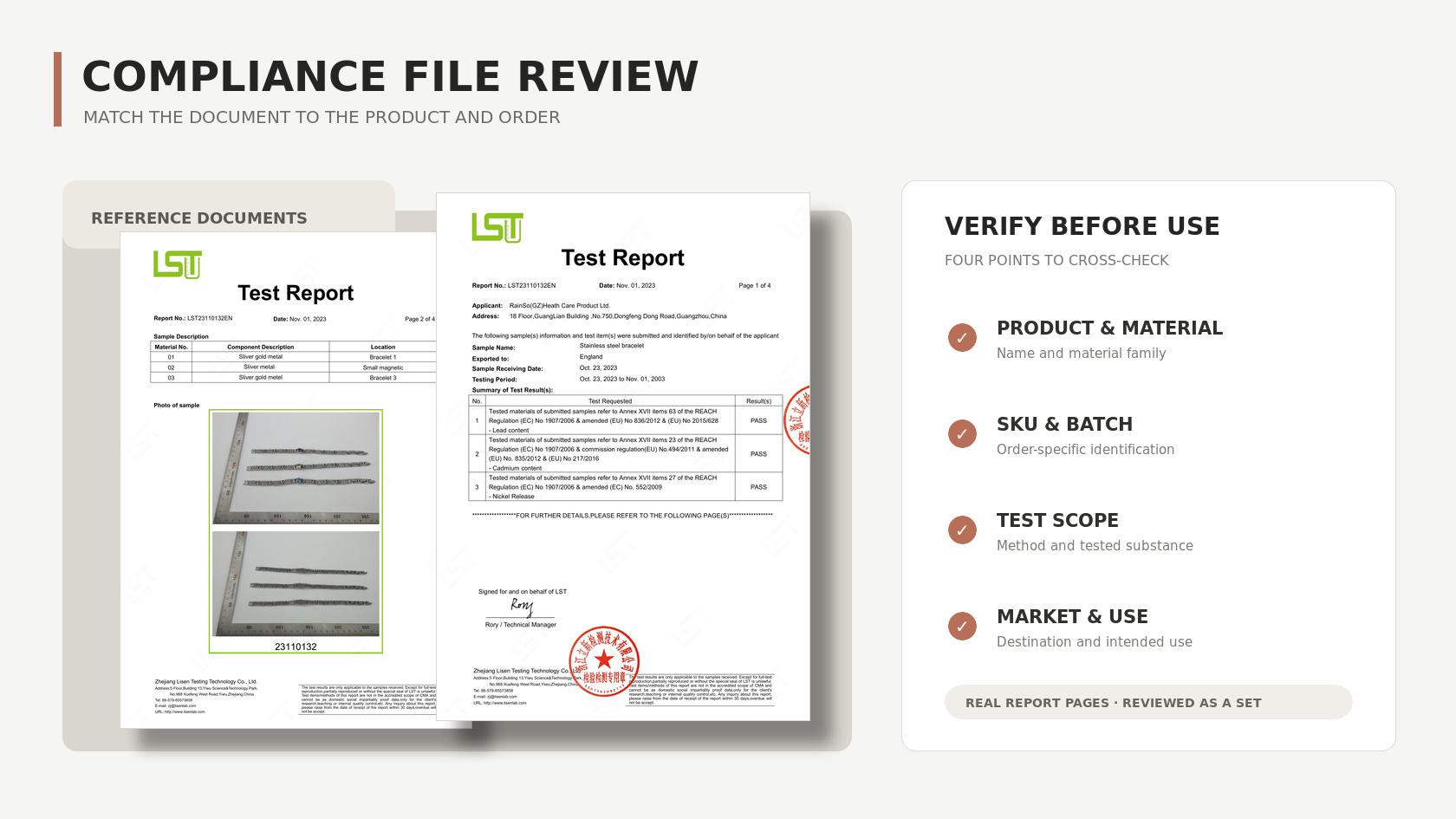
A supplier declaration is not a one-line certificate. It should identify the product or SKU, the component or material tested, the production details, the report reference, the date, the tested endpoints, and any method reference. If the declaration only says compliant without connecting to a file, ask for the underlying report or a clarifying letter.
How to read a laboratory report against an actual SKU and batch
Start with the report header. Confirm the product description, SKU code, colorway, component breakdown, and a traceable production identifier where available. If any field is missing or generic, the report may still be informative, but it cannot be treated as proof for a different item.
Next, check the test method and listed substances. A lead and cadmium screen is not a full Proposition 65 assessment. A nickel release test under EN 1811 answers a specific exposure question; it does not cover every California warning obligation. RainSo uses SGS and EN 1811-related documentation when relevant, with the report tied to the tested item, its components, and the conditions described in the file.
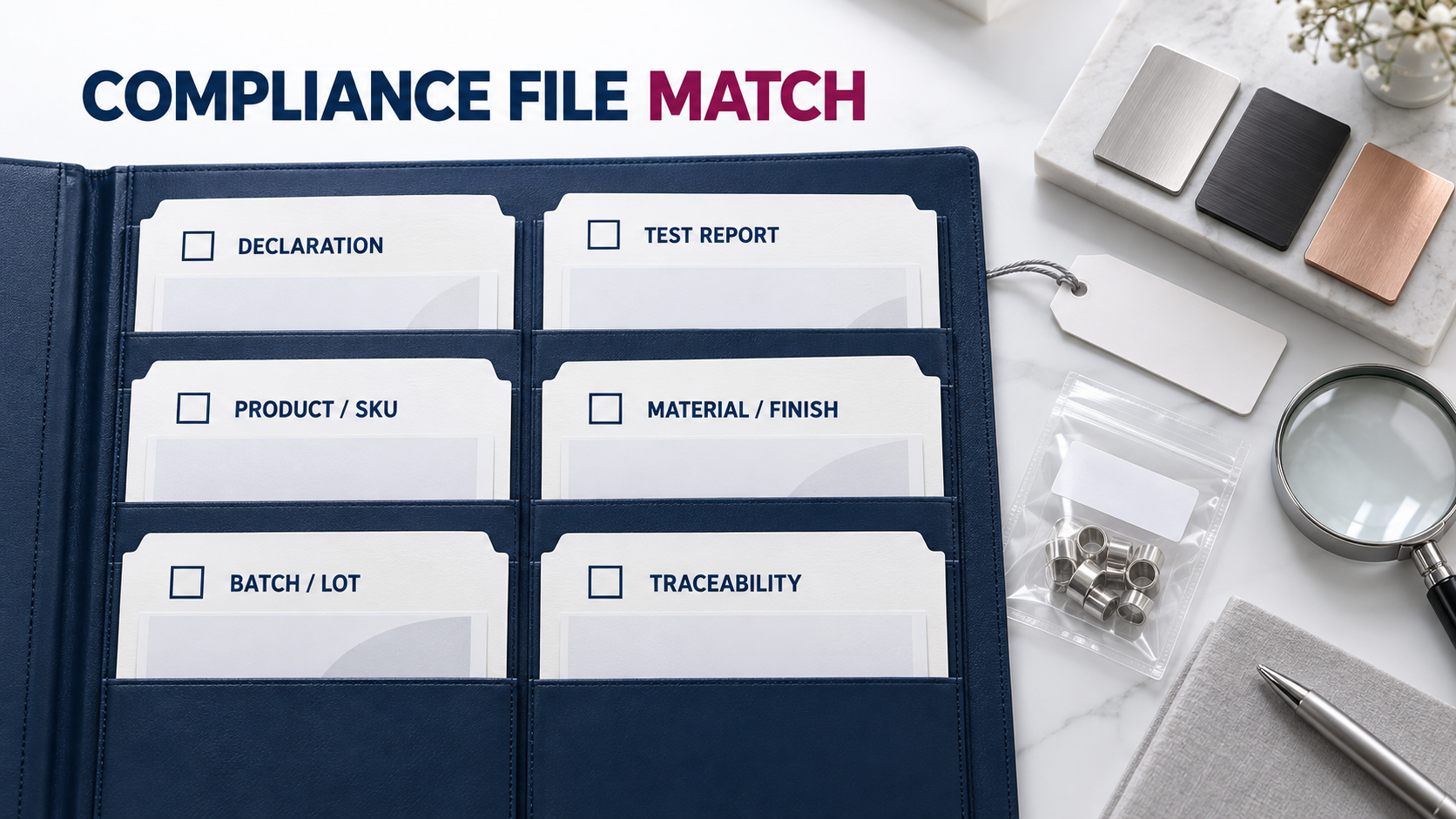
Finally, compare the result against the applicable OEHHA threshold or safe harbor value for the intended exposure route. If the report does not state the threshold or route, ask the supplier before relying on it. If private-label logo engraving will be added later, mention that during file review. Private-label logo engraving is available from 100 units once project conditions are confirmed, and the added process can change the surface layer or alter which component documents apply.
Why REACH and Prop 65 are not interchangeable
REACH is a European Union regulation with its own substance list and authorization process. Proposition 65 is a California warning statute with a different legal trigger. A REACH declaration can support due diligence, but it does not replace a Proposition 65 review. An EN 1811 nickel release result can support a nickel-release question, but it does not resolve lead, cadmium, or phthalate exposure points.
Sellers that cover both the EU and California should request REACH and Proposition 65 documentation for the same item and production context. For REACH context, see the ECHA REACH overview.
Where RainSo material documentation fits
RainSo is an in-house magnetic jewelry manufacturer and B2B supplier established in 2007. The company has a Guangzhou commercial team and production resources in Dongguan. That structure supports direct material conversations and file review during sourcing, but it does not mean every current SKU carries pre-certification for every market.
RainSo’s materials and compliance pillar explains the broader global access logic. The materials and compliance pillar covers the separate REACH, Proposition 65, SGS, EN 1811, and ISO 9001 references. It also links the main ECHA and OEHHA sources. The the QC process covers incoming material, pre-plating inspection, plating quality, post-assembly inspection, clasp strength, structure recheck, and pre-shipment checks. Learn more about RainSo for background on the sourcing team and production resources.
Buyer checklist before placing a jewelry order
- Define the target market: California only, multi-state US, EU, or mixed. The market map changes which documents matter.
- List the exact SKUs, material families, finishes, and components you plan to order.
- Ask for documentation that names the SKU, tested endpoints, and production details.
- Request the relevant OEHHA listed chemicals rather than a generic compliance phrase.
- Separate warning-label decisions from product safety decisions. A warning can signal a legal obligation without being a safety verdict.
- Keep file versions and traceability records, and reopen review when the material, coating, component source, or process changes.
If the supplier cannot connect the document to the product being supplied, ask for a reopened file review before sampling or bulk production. The team can review the applicable file when the buyer shares the project, SKU, material, and target market through the inquiry path.
What RainSo can and cannot confirm before a project review
The team can discuss current material families, production controls, and available documentation routes. RainSo cannot confirm compliance across every catalog item because the applicable file depends on the specific product, its components, and the order details.
RainSo products are fashion and wellness-inspired accessories, not medical devices. This guide stays within jewelry compliance and documentation. RainSo does not provide legal advice. The buyer is responsible for final California label, warning, and placement decisions. RainSo can provide the compliance documentation that matches the applicable order and escalate technical questions to the compliance owner.
Frequently asked questions
Does a Prop 65 warning mean a jewelry product is unsafe or banned?
A warning indicates that a California seller must give clear and reasonable notice for a listed chemical exposure above an applicable threshold. It is a labeling obligation rather than a product ban. Review the document tied to the item and decide whether the warning fits the retail model.
Which jewelry materials most often require Prop 65 review?
Lead and cadmium in base alloys, solder joints, plated layers, and decorative coatings are the most common review points. Certain nickel compounds and some phthalates can also matter depending on the component and how the piece is used. The exact style and components determine the review more than the material family alone.
Which supplier documents should a jewelry buyer request for Prop 65?
Ask for a written statement that names the SKU, lot, and tested endpoints, along with the supplier declaration or compliance statement. Where available, add laboratory reports such as SGS screens, EN 1811-related nickel release data, and the relevant OEHHA chemical comparison. A blanket certificate is not enough by itself.
How can a buyer verify that a test report matches the actual order?
Start with the report header: check the product description, SKU, colorway, component breakdown, and production identifier where available. Confirm the test method and listed substances. If any identifier is missing or generic, the report cannot be used as proof for another item. Ask the supplier to confirm the file before sampling.
Does a REACH or EN 1811 report automatically cover California Prop 65?
REACH is a European regulation with different substance triggers, while EN 1811 addresses nickel release specifically. Both can support due diligence, but neither replaces a Proposition 65 review for lead, cadmium, phthalates, or other listed chemicals. Request documentation for the same item and production context.
Next step for jewelry buyers
If you are sourcing magnetic jewelry and need to check California Proposition 65 documentation for a specific item, material, or production details, send the product list and target market through the RainSo inquiry page. RainSo can review the applicable file and respond before sampling or bulk order decisions.