OEM vs ODM Jewelry: What Changes for Magnetic Jewelry Buyers?
- Choose ODM when an existing RainSo design can be selected, modified, and branded. Light customization usually plans around 50–100 pieces per style.
- Choose OEM when you bring an original drawing, tech pack, reference sample, or product concept that needs new development. Planning often starts around 100 pieces per style, with a mould/tooling fee quoted per design.
- Both routes can include private label or custom packaging when product suitability, artwork, and order scope are confirmed.
An OEM vs ODM jewelry decision often comes down to a simple question: where does the product design start? In RainSo’s project workflow, ODM begins with a RainSo design that a buyer can select, adjust, and brand. OEM begins with the buyer’s drawing, tech pack, reference sample, or written concept, then moves through CAD, tooling, and staged approvals. That difference affects who controls the design, who signs off along the way, and how much development work is needed before an order can be planned.
On this page
Starting Point: Existing Design vs Buyer Brief
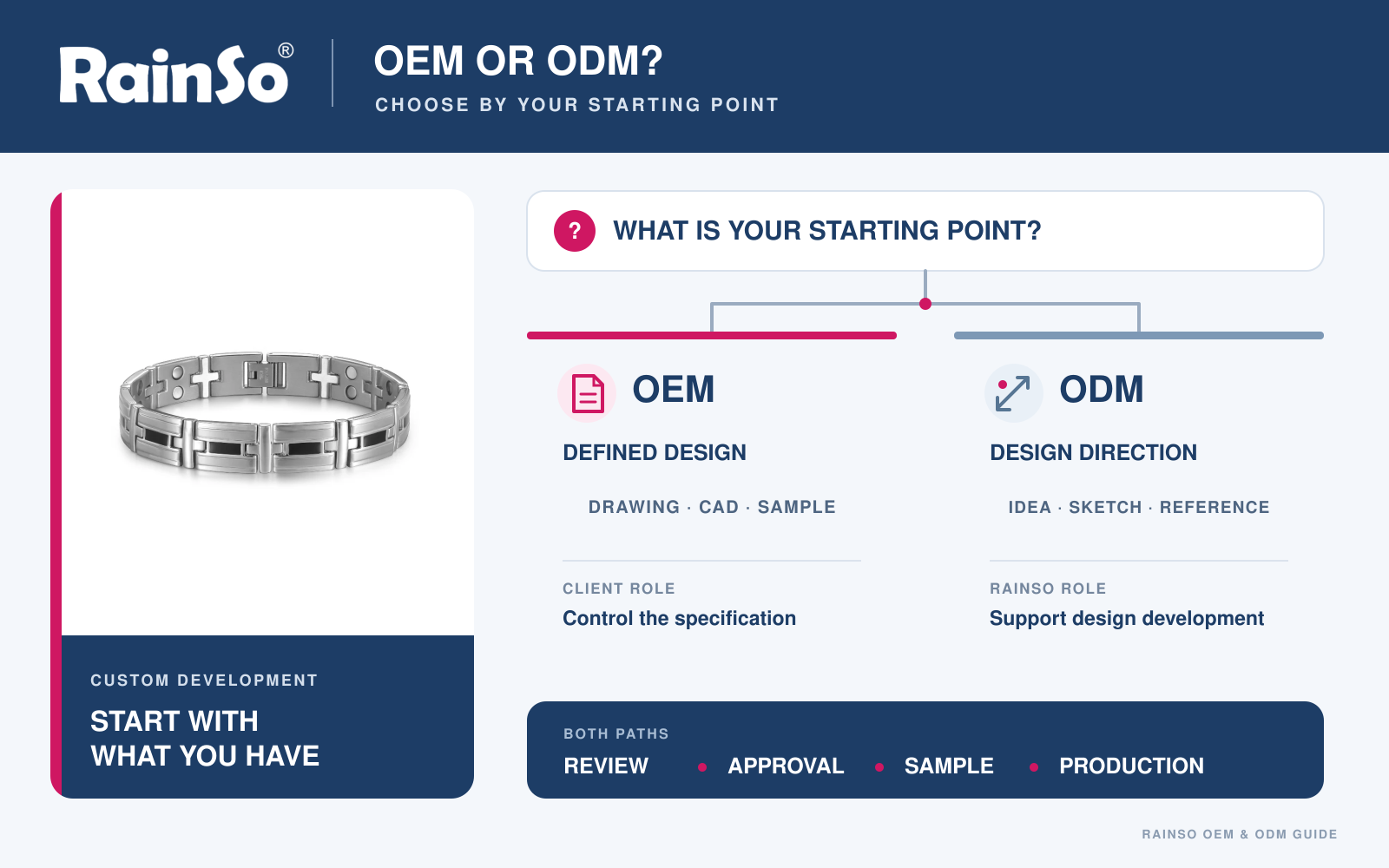
ODM starts inside RainSo’s existing design library. Buyers can review bracelets, rings, necklaces, earrings, and anklets in 316L stainless steel, copper, titanium, or ceramic. Style directions such as arrow-link, compass, natural inlay, embossed polished steel, and matte black are editorial references, not promises of retail performance. The base structure usually stays close to the selected design.
OEM begins when the existing range does not have the right shape, structure, or detail. The buyer brings a drawing, reference sample, or written concept. RainSo reviews structure, material, magnet position, clasp function, and finish. If any of those points are unclear, more development work is needed before sampling.
For a closer view of both routes, see OEM and ODM capability.
Buyer Decision at a Glance
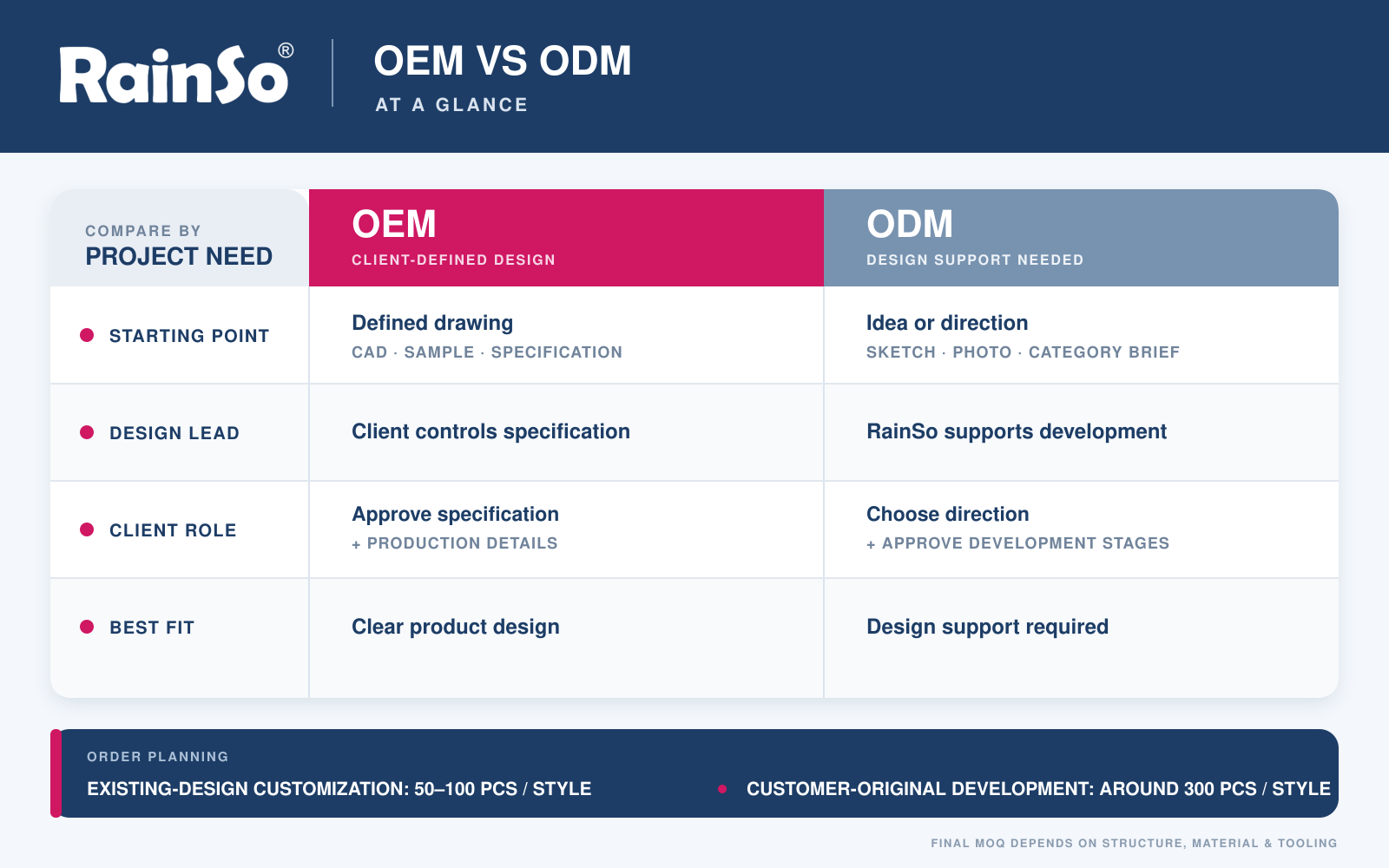
| Factor | ODM jewelry | OEM jewelry |
|---|---|---|
| Starting point | Existing RainSo design or style direction | Buyer-owned concept, drawing, or reference |
| Design control | Selection and modification of a base design | Specification of geometry, materials, finish, magnet placement |
| Approval owner | Buyer confirms selected sample and final sample | Buyer approves CAD, material, finish, sample |
| MOQ planning range | Light customization usually starts around 50–100 pieces per style | Customer-original development usually starts around 100 pieces per style |
| Sample workflow | May shorten early review if an existing base fits | New CAD and tooling stages usually add early work |
The OEM vs ODM jewelry comparison above is a planning baseline. Structure, tooling, material, and packaging conditions are then priced in the final quote.
In OEM vs ODM jewelry planning, a buyer who selects an existing 316L stainless steel bracelet and changes only the finish and logo is usually on the ODM route. A buyer who submits a new bracelet drawing with a custom clasp and specified magnet positions is usually on the OEM route. The difference is the source of the design and the amount of new engineering, not just order size.
Design Control: Selection vs Specification
With ODM, the buyer’s main job is selection. RainSo keeps the base geometry, structure, and proportions. The buyer normally chooses material, finish, color, and small changes that do not require new tooling. A logo can be added when private-label conditions are confirmed.
Need control over the clasp mechanism, magnet position, dimensions, and surface detail? OEM puts specification in your hands. You define the product details and the packaging direction. That gives more control, but incomplete drawings or late changes can also slow approval and add tooling risk.
For general background on protecting original designs, see the WIPO industrial design overview.
Approval Responsibility: Who Signs Off at Each Gate
ODM approval usually starts with style selection. The buyer confirms the base design and later checks the sample against the agreed specification. Because the base design already exists, this approval path is often shorter.
OEM approval is more staged. The buyer signs off on the brief, reviews the initial CAD direction, and confirms material, finish, and sample details. Each point matters; an unanswered question can hold up the project.
MOQ Planning: Where Order Size Changes
For OEM vs ODM jewelry, the planning range depends on the route. Light customization of a suitable existing design usually starts around 50–100 pieces per style. Customer-original development usually starts around 100 pieces per style. These figures help plan the first commercial discussion; final MOQ follows the confirmed structure, tooling, material, and packaging.
Private-label laser logo engraving is free from 100+ units when product suitability, artwork and order scope are confirmed; mixed-batch quantities can count toward that total.
CAD and Sample Workflow: Timing Is a Range
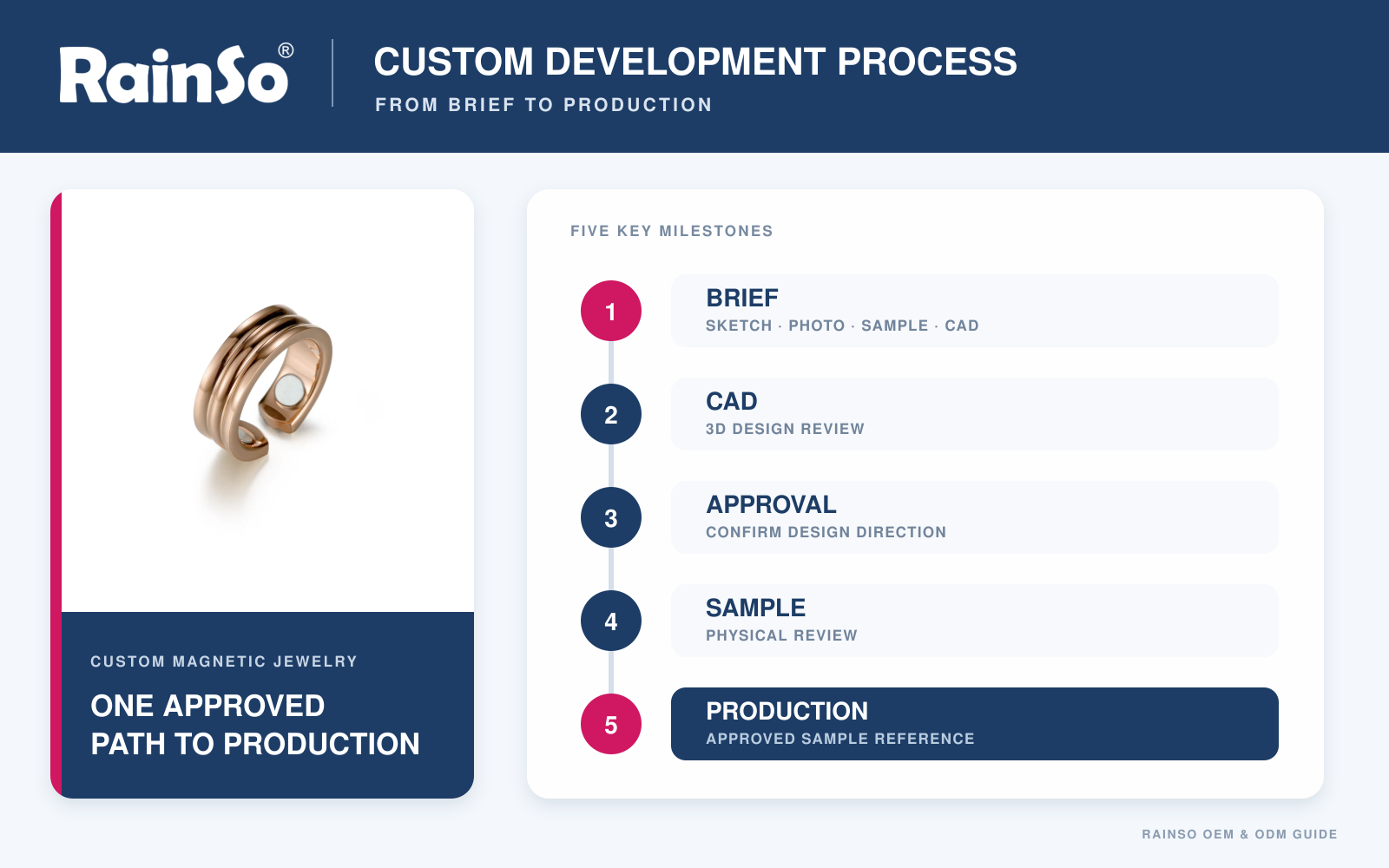
RainSo provides a 48-hour initial CAD direction after a complete and feasible project brief is locked. It is an early design direction; the final drawing, sample, and production dates are confirmed later. Complex projects can take longer.
Standard custom samples are generally planned within 30–45 days after CAD direction, material, tooling, and sample requirements are set. Extra revisions or complex structures can add time. ODM may require fewer early development steps when an existing design and sample already fit the brief, but the final timeline is confirmed for each project.
Private Label and Packaging: Scope and Pricing
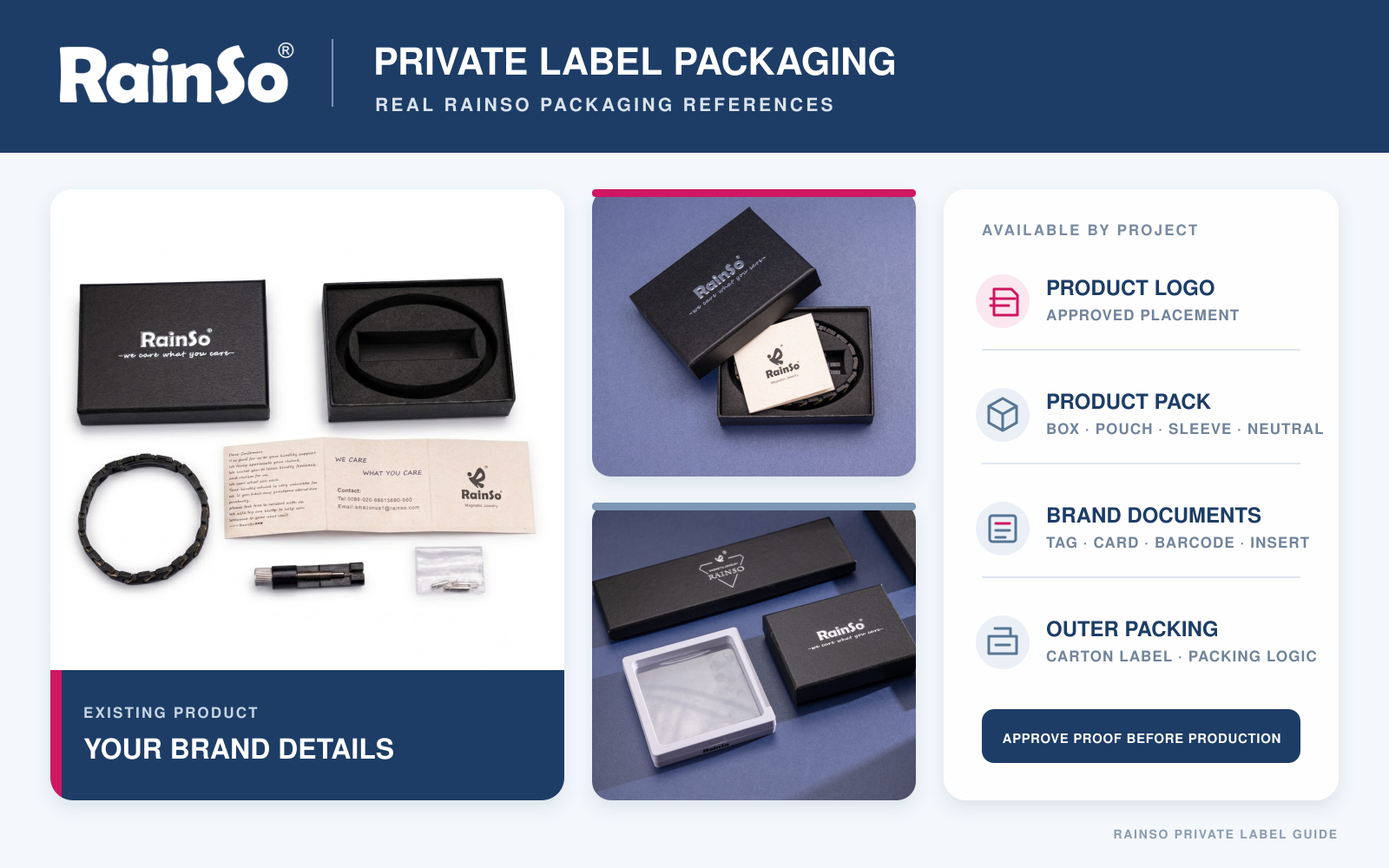
Laser logo engraving is free for eligible orders of 100+ pieces, and mixed-batch quantities can count toward that total. Product suitability, file quality and order scope are confirmed before production. See the private-label route page for the current service scope.
Custom packaging is quoted separately according to the box, insert, printed materials, quantity, and shipping requirements. Ask how the pack affects structure protection and unit count, then review the Custom packaging solutions scope.
Buyer Questions to Ask Before Choosing
- Do I already have a complete design, or do I need an existing base to modify?
- Who approves the structure, finish, magnet placement, and sample details?
- What planning MOQ range fits my first order and target retail model?
- Do I need logo engraving, and is my artwork suitable for the requested material?
- Does the destination market require product-specific documents such as REACH or California Proposition 65, or testing against standards such as EN 1811? Confirm the product, material, batch, test method, issuing laboratory, and document validity.
- If ISO 9001 matters to your review, ask about it separately as a company quality-management system rather than a product compliance report.
- How is custom packaging quoted, and what does it include?
Why the Distinction Matters for RainSo B2B Buyers
The OEM vs ODM jewelry distinction matters most when a project enters production. RainSo was established in 2007, and its team’s jewelry-industry experience dates to 2004. The company operates as an in-house magnetic jewelry manufacturer and B2B supplier, so the route affects how a project is actually handled. See the About RainSo company profile for the published Guangzhou team and Dongguan production structure. Buyers who know which route they are on can request the right documents, approve the right stages, and avoid treating an ODM modification like a full OEM development.
Frequently Asked Questions
Does ODM usually cost less than OEM?
Not necessarily. ODM may reduce design and tooling effort when an existing design is close, but pricing still depends on material, finish, order quantity, packaging, private label, and tooling. The quotation sets the final cost.
Can I put my logo on an ODM design?
Yes, when private-label conditions are met. Private-label laser logo engraving is free from 100+ units when product suitability, file quality and order scope are confirmed; mixed-batch quantities can count toward that total.
Is the 48-hour CAD direction a final sample date?
No. The 48-hour initial CAD direction is an early design direction after a complete and feasible brief is locked. It is not a final drawing, sample, or production date.
What MOQ should I plan for OEM vs ODM jewelry?
For planning, light ODM customization generally starts around 50–100 pieces per style, while original OEM development often starts around 100 pieces per style and requires a mould/tooling fee quoted per design. The confirmed MOQ follows the structure, tooling, material, and packaging.
Which path is faster: OEM or ODM?
ODM may require fewer early development steps when an existing design and sample already fit the brief. OEM usually needs more review before sampling. The sample-planning window starts after CAD direction and project requirements are set.
Is private-label engraving free at 100 pieces?
Laser logo engraving is free on eligible orders of 100+ pieces, and mixed-batch quantities can count toward that total. Product suitability, file quality and the agreed order scope are confirmed before production.
Need to compare your specific ODM or OEM magnetic jewelry project? Send your brief and include your design reference, target quantity, logo file, and packaging needs.