For a magnetic jewelry OEM brief, define magnet placement by reference points on the product—clasp, link, pendant, bead—and state the fixing requirement as design-specific, not as a universal specification. Exact position, retention, and surrounding structure are SKU-specific and confirmed in the quotation or product specification. Buyers should expect initial CAD direction within 48 hours after a complete and feasible brief is confirmed. Planning MOQ is usually 50–100 pieces per style for light customization or around 100 pieces for original development; original development requires a mold/tooling fee confirmed per design.
On this page
Magnetic jewelry OEM brief: placement and fixing method before CAD review
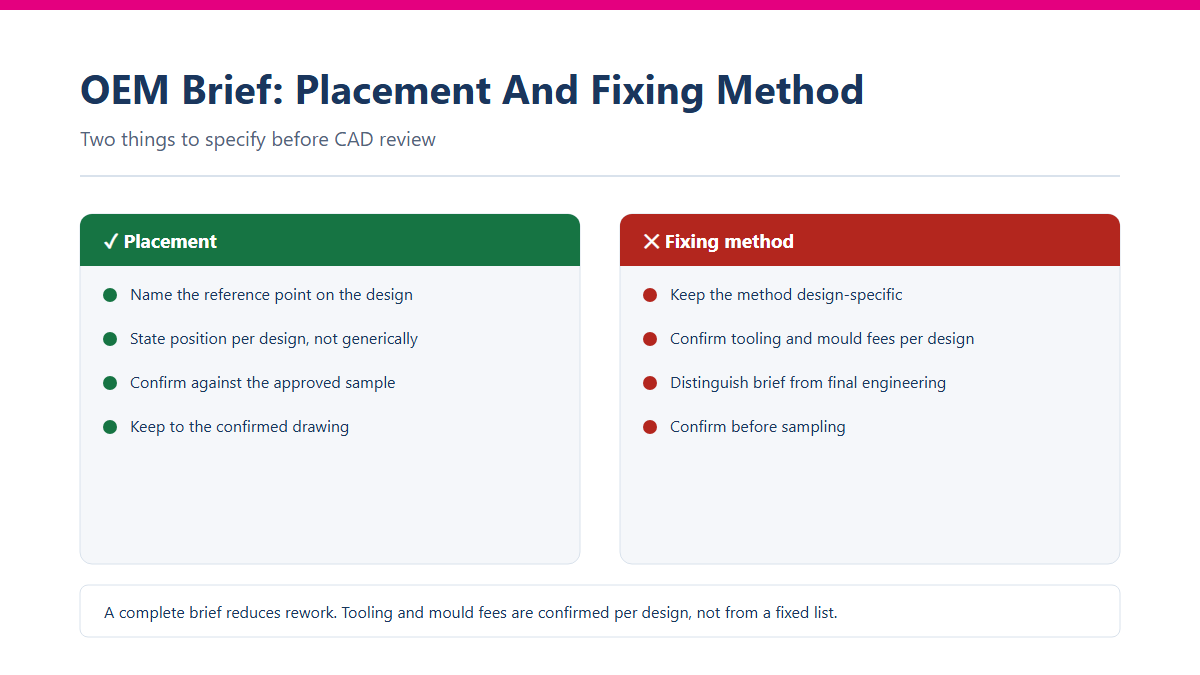
Before CAD review, treat the magnetic jewelry OEM brief as design direction, not final engineering. List the magnet reference point—clasp, link, pendant, bead, or backing—and note any clearance, concealment, or assembly constraint. For fixing, specify the performance requirement, such as the magnet must remain fixed during normal handling, and leave the exact production method to the product specification. The brief then stays focused on the buyer requirement rather than a universal technical solution.
For the OEM/ODM entry point, see RainSo OEM & ODM.
Magnet placement: brief the reference point
Use product reference points rather than universal coordinates. Common reference points are clasp, link, pendant, bead, and backing. The first CAD direction is a starting direction, not a final drawing or production promise, so the brief should not assume exact placement coordinates are locked at CAD stage.
Fixing method: keep it design-specific
The brief should state the functional requirement, not a single fixing method for all designs. Exact fixing is design-specific and is set out in the order documents. RainSo does not publish a universal magnet grade, strength, or therapeutic effect, so avoid asking for those as blanket specifications.
OEM brief input fields
A useful brief gives the supplier something to evaluate, not a list of vague preferences. Mark each item as fixed, preferred or adjustable, and name the person responsible for confirming it.
| Brief input | What the buyer should provide | Who confirms |
|---|---|---|
| Reference image or design intent | An approved reference, sketch or description of the desired direction. | Buyer |
| Product type and size range | Category, target dimensions and any wearable fit range. | Buyer, then supplier feasibility review |
| Magnet position | Reference point such as clasp, link, pendant, bead or backing, with any clearance requirement. | Buyer states; supplier confirms feasibility |
| Functional constraints | Retention, movement, comfort, concealment, assembly or surface requirements. | Buyer defines the requirement; supplier confirms the method |
| Material and finish constraints | Any required material family, colour or finish, with a note on what is preferred versus fixed. | Buyer states; supplier confirms availability |
| Fixed versus adjustable items | Which details cannot change and which may be adapted during CAD or sampling. | Buyer approves the final list |
| Target market or compliance need | Destination and any document or labelling requirement the project must consider. | Buyer states; applicable scope confirmed separately |
| Quantity and project intent | Planning quantity, target launch timing and whether the brief is stock, light customization or original development. | Both sides confirm in the quotation |
| Approval responsibility | The person who approves CAD direction, sample changes and deviation notes. | Buyer names the approver |
Do not treat any brief field as approved until the responsible person confirms it in writing. This is what keeps a 48-hour CAD direction separate from a sample approval or a production commitment.
Timing, MOQ and tooling after a complete brief
Initial CAD direction is planned within 48 hours after a complete and feasible brief is confirmed. It is a starting direction, not a final drawing, sample or production promise; confirm current timing for the project.
Light customization of a suitable existing design usually starts around 50–100 pieces per style. Customer-original development usually starts around 100 pieces per style and requires a mould/tooling fee quoted per design. The tooling fee is not optional. Final MOQ depends on structure, tooling, material and packaging, and is confirmed in the quotation.
Classify the project before submitting the brief: light customization of an existing design or customer-original development. For original development, do not assume a fixed or free mould. Before sampling, review the CAD direction against the placement, fixing and brief inputs above. See magnetic jewelry CAD review before sampling.
FAQ
What magnet placement details should the OEM brief include before CAD review?
Include the magnet location by product reference point, such as clasp, link, pendant, bead, or backing. Exact position, retention, and surrounding structure are SKU-specific and confirmed in the quotation or product specification.
Does RainSo guarantee one fixing method for every magnetic jewelry design?
No. The fixing method follows the design and is recorded in the order documents. Do not treat a single fixing method as a universal solution.
How quickly will I see initial CAD direction?
Initial CAD direction is planned within 48 hours after a complete and feasible brief is confirmed. It is a starting direction, not a final drawing, sample or production promise. Confirm current timing for the project.
What are the planning MOQ and tooling rules?
Light customization of a suitable existing design usually starts around 50–100 pieces per style. Customer-original development usually starts around 100 pieces per style and requires a mould/tooling fee quoted per design; the fee is not optional. Final MOQ depends on structure, tooling, material and packaging and is confirmed in the quotation.
Send your magnetic jewelry OEM brief to RainSo. Include target quantity, product type, magnet placement reference, fixing requirement, packaging, and target market so the quotation can be prepared accurately.
For general jewelry industry resources, see Jewelers of America.