REACH Jewelry Compliance for EU Buyers: Scope, Batch Checks, and Document Verification
For an EU jewelry buyer, REACH jewelry compliance starts by identifying which chemical restrictions and information duties apply to the finished article. The supporting evidence should identify the tested sample, material, surface treatment, test method, and results. REACH does not automatically require a new laboratory test for every production batch. Existing evidence should be reassessed when the material composition, plating, component source, or manufacturing process changes, or when the report does not represent the goods being supplied. RainSo can help check whether available third-party reports, material declarations, and official regulatory information fit the order.
Treat this as sourcing information rather than legal advice. Obligations can fall on manufacturers, importers, and downstream users according to their role and the activity they perform.
What REACH Does and Does Not Do for Jewelry
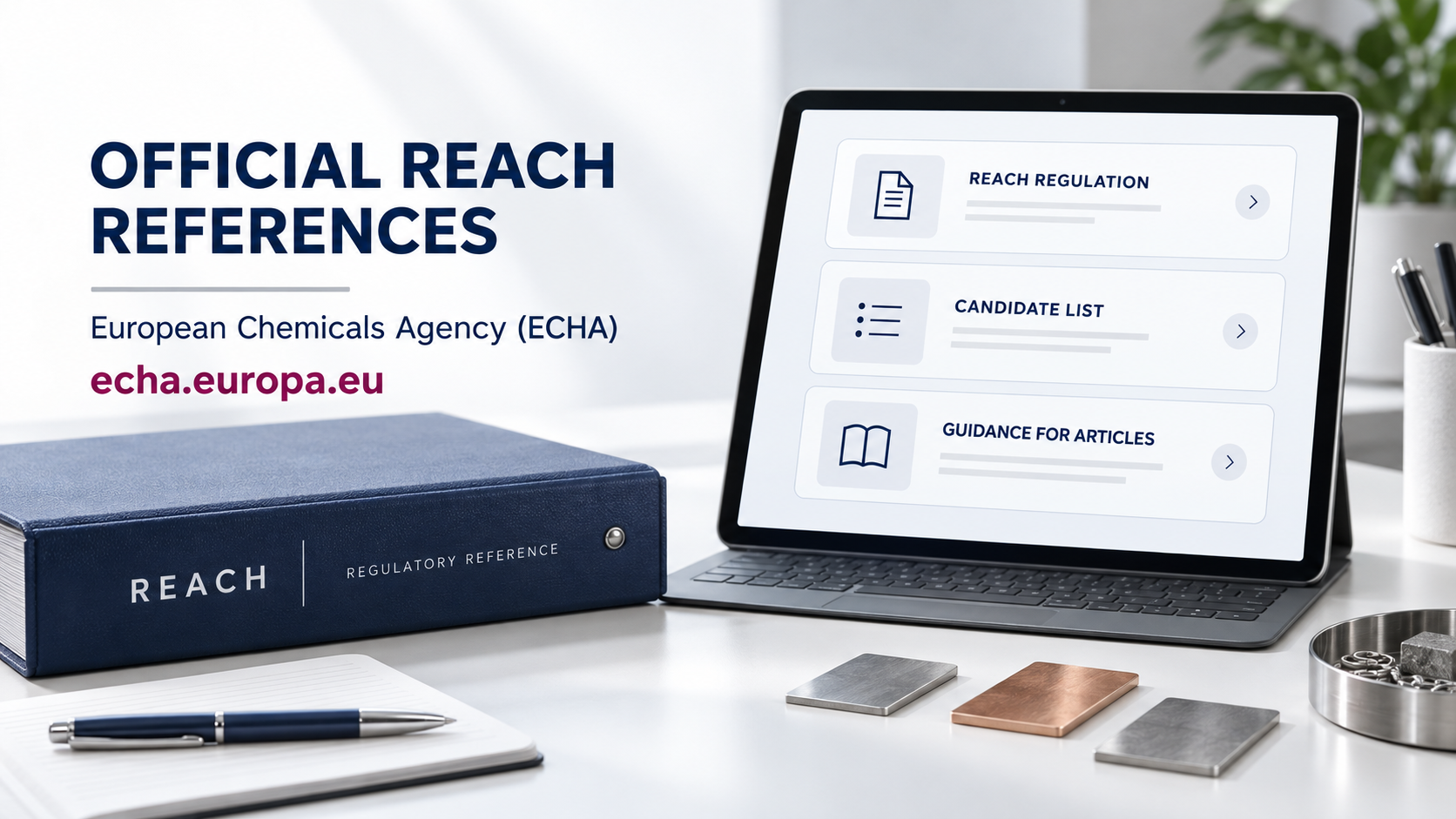
Under REACH, the European Union regulates Registration, Evaluation, Authorisation and Restriction of Chemicals across substances, mixtures, and articles. Most finished jewelry falls into the article category. A logo or one-page approval marked REACH does not cover an entire catalog. Suppliers may support a compliance assessment with material records, declarations, relevant test reports, and production information linked to the product. For the official regulation and industry duties, use the European Commission REACH overview. For the Candidate List and further regulatory context, start with the ECHA REACH overview.
A workable document request includes the product drawing or bill of materials, the relevant test reports, and a declaration that identifies the article and the information it covers.
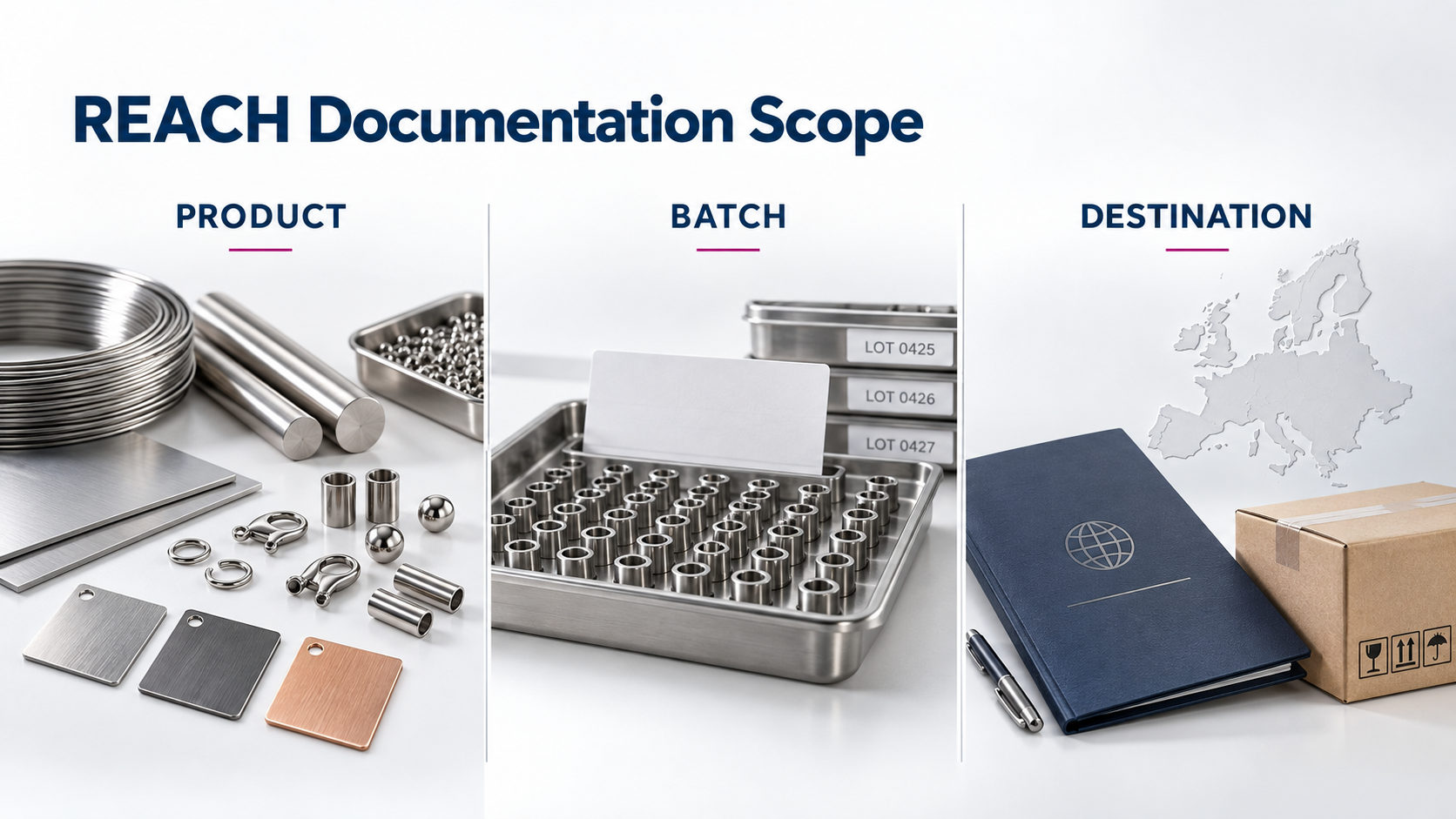
Why Scope Depends on the Product
A 316L stainless steel bracelet with a plated clasp, a coated copper earring, a titanium ring, and a ceramic ring raise different chemical questions. One piece may need nickel release data, another cadmium or lead review, and another a check for phthalates or Candidate List substances. The material, plating, components, and skin-contact duration drive the request.
Magnets, clasps, plating, solder points, and decorative inlay can all introduce their own chemical profile. A report prepared for one style will not automatically answer questions about another, so start by locking the SKU and bill of materials.
RainSo’s published material families now include 316L stainless steel, copper, titanium, and ceramic. Ceramic serves as the public non-metal material label. When asking for REACH documentation, refer to the actual material, plating, coating, and component list for the selected item.
Why Scope Depends on the Batch
The question is whether the tested sample remains representative of the goods being supplied. An existing report should be reassessed when the raw-material source, alloy composition, plating system, coating, component source, or manufacturing process changes.
Review the report against the current product rather than treating a batch number as the only test of validity. The document should identify the tested sample and explain whether that sample remains representative of the supplied article. A new design, material combination, or changed surface treatment may require additional assessment or testing.
Why Scope Depends on Destination
The underlying REACH requirements apply across the EU/EEA. Retailer specifications, contractual documentation, market surveillance practices, and sales-channel requirements may still vary. Those additions are commercial or enforcement requirements; they do not create a different EU-wide chemical limit for the same article.
The article’s use and exposure profile also matter. Under the same EU rules, a piercing earring may be handled differently from a necklace because exposure and contact duration differ. If that shipment later reaches California, Proposition 65 can introduce separate warning and exposure review work. For California context, use the California OEHHA Proposition 65 page.
EU REACH and US Proposition 65 are separate legal frameworks, so keep them distinct in document requests and identify the destination and retail channel clearly.
How to Verify SGS and EN 1811-Related Documents
EN 1811 is a test method for nickel release from articles intended for direct and prolonged skin contact. SGS is a testing, inspection, and certification company, not a REACH authority. A report issued by SGS or another laboratory is evidence only for the sample and test scope described in that report. RainSo can check whether available third-party reports match the product and scope requested for the order.
When you review a file, check the following:
- The article description on the test document matches the SKU you are buying.
- The material and surface condition match the finished piece, including any plating or coating.
- The report identifies the tested sample and whether it represents the goods currently being supplied.
- The test method and coverage answer your real question, such as nickel release under EN 1811.
- The report includes the laboratory, report number and date, sample identification, test method and version, results, limits, and whether the test covers a component or the finished article.
Ask RainSo which parts of the REACH file exist for the order. A report covering only one component or a lab sample should not be presented as full finished-goods compliance.
Document Checklist for EU Jewelry Buyers
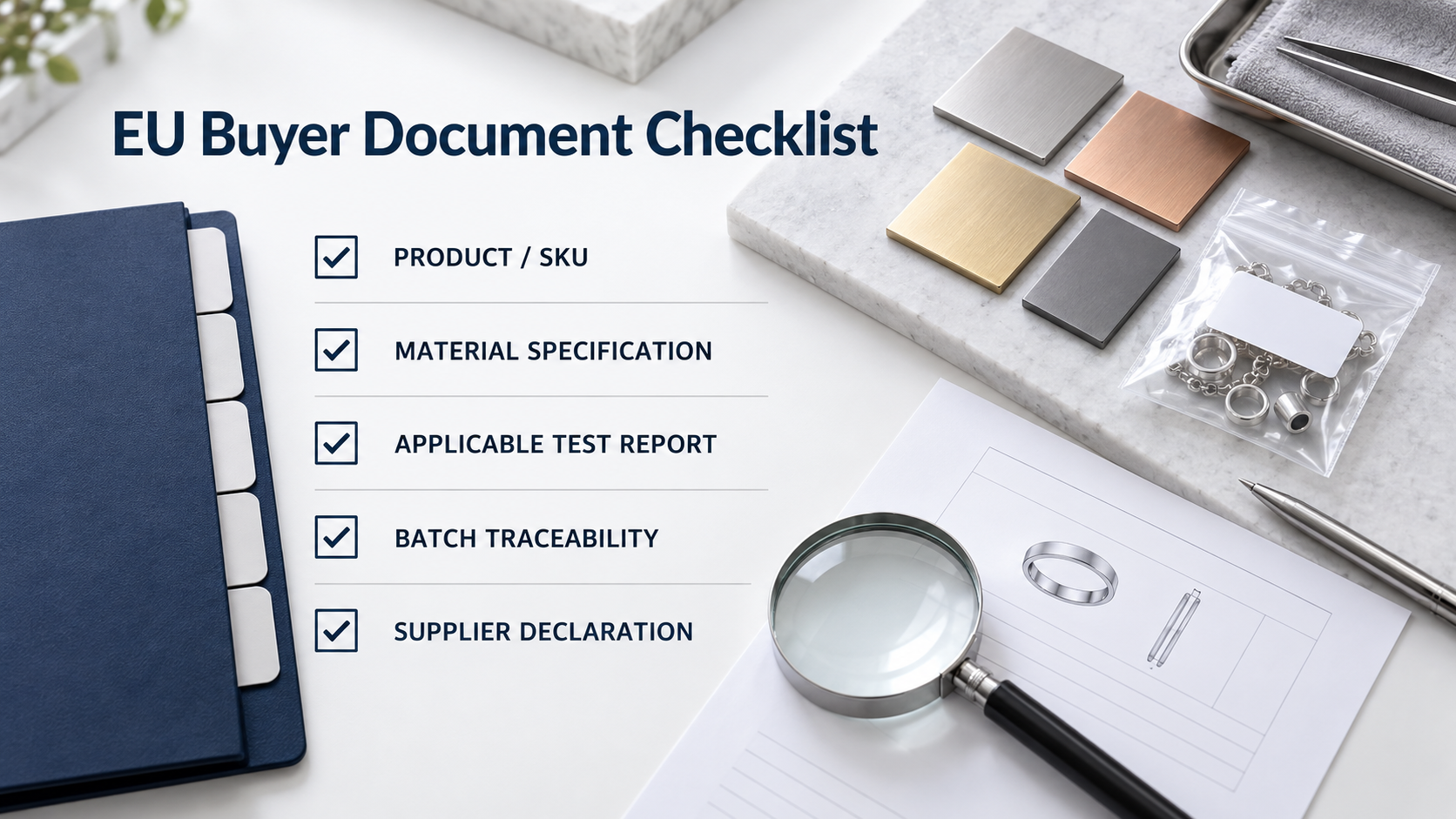
Before you send an inquiry, gather these details:
- Product category and SKU, if you have it.
- Material and component breakdown, including plating and magnet placement.
- Destination country or EU market plus the retail channel.
- The information you need, such as an EN 1811 nickel-release report or Article 33 information where applicable.
- Whether the order is stock, custom, or private label, and whether engraving, coating, or packaging changes the product.
- Whether California retail is planned, so Proposition 65 can be reviewed separately.
For order-level quality checks, RainSo’s the QC process covers material, finish, dimensions, magnet placement, clasp function, structure, and packing where relevant. The QC record sits alongside compliance documents rather than replacing a REACH or EN 1811 test report.
How RainSo Supports the REACH Verification Workflow
RainSo is an in-house magnetic jewelry manufacturer and B2B supplier founded in 2007. Its team can check available third-party test documents against the requested product and explain where existing evidence may not cover a new design or material change. Compliance documentation at RainSo is reviewed according to the product and test scope rather than treated as a catalog-wide approval.
The catalog covers bracelets, rings, necklaces, earrings, and anklets. For private-label projects, confirm whether engraving, coating, packaging, or other product changes affect the material or component scope covered by existing documents. Include the material, destination market, and requested document type in the inquiry. For more background on RainSo as a production partner, see the About RainSo page.
Before finalizing a document request, read the Materials and Compliance pillar for the broader global market access baseline.
Common Mistakes EU Buyers Make
- Treating REACH as a badge or single-page approval that covers every SKU.
- Requesting a generic SGS certificate without identifying the product, tested sample, material, test method, or report scope.
- Assuming a past test report will automatically describe future production.
- Forgetting that EN 1811 addresses nickel release and may not cover every REACH restriction.
- Merging US Proposition 65 and EU REACH into one request without destination details.
Frequently Asked Questions
Is REACH jewelry compliance the same as a CE mark?
They serve different purposes. CE marking generally applies only to product groups covered by specific EU product rules, not to jewelry as a general category. REACH is a chemicals regulation, and its evidence usually comes from material information, declarations, or test reports that describe the article and test scope.
Does an SGS report mean every RainSo product is REACH compliant?
A report from SGS or another laboratory covers only the sample, material, and test scope described in that file. Check that the tested sample remains representative of the bracelet or other item being supplied. If composition, coating, components, or process change, the report should be reviewed again.
Why cannot RainSo give one universal REACH document for the whole catalog?
SKUs can differ in metal, plating, coating, magnet placement, and component supply. The applicable restrictions and information duties depend on the article and its composition, not on a single catalog-wide label. One document for every SKU would claim more than the underlying evidence can support.
What should an EU buyer include in an inquiry to RainSo?
Name the product category, material, SKU if available, destination country, and the information you need, such as an EN 1811 nickel-release report or Article 33 information where applicable. RainSo can then check whether existing evidence covers the product or whether further assessment is needed.
Where can buyers verify REACH rules?
The European Commission explains the general REACH framework, while ECHA publishes official guidance and the Candidate List. Under REACH Article 33, an article containing a Candidate List substance above 0.1% w/w can trigger information duties; consumer requests must be answered within 45 days. Businesses should confirm their role and obligations with the applicable official sources and legal advisers.
Does REACH apply to all jewelry destinations?
REACH applies when an article is placed on the EU or EEA market. Outside that area, chemical rules vary by jurisdiction. If the same item later sells in California, OEHHA Proposition 65 can create separate warning and exposure review duties.
Send a Qualified REACH Inquiry
When you need a REACH jewelry compliance check for a particular jewelry item, send the SKU, material, destination market, and the document type you require. RainSo will review whether available third-party reports and declarations cover the product being supplied, or whether further assessment or testing is needed. Before submitting, review the Materials and Compliance pillar for the detailed material compliance baseline.
To start a project conversation, use the RainSo inquiry form.