
A small test range of magnetic bracelet styles can be more useful than a large order built on trend predictions. This guide helps retailers choose five styles and use sales signals before reordering.
Choosing and testing styles
How Magnetic Bracelet Styles Can Be Tested by Small Retailers
How to build a small test series
Do not build a first assortment from one personal favourite. Choose four or five styles that can sit together without looking repetitive. Check the customer group, display space and price bracket for each piece. If a shop sells gifts, a style with a recognisable symbol or texture may be easier for a customer to understand. If the shop sells everyday accessories, a simple link or matte finish may be more practical.
A test order does not need to cover every colour and size. Start with the pieces that represent the clearest direction. Keep a simple record of what sold, what was returned and what customers asked for. For cross-border retail requirements, WTO e-commerce resources can be a useful starting point for market-level questions. That information is more useful than a general trend claim.
1. Arrow-link styles for broad casual displays
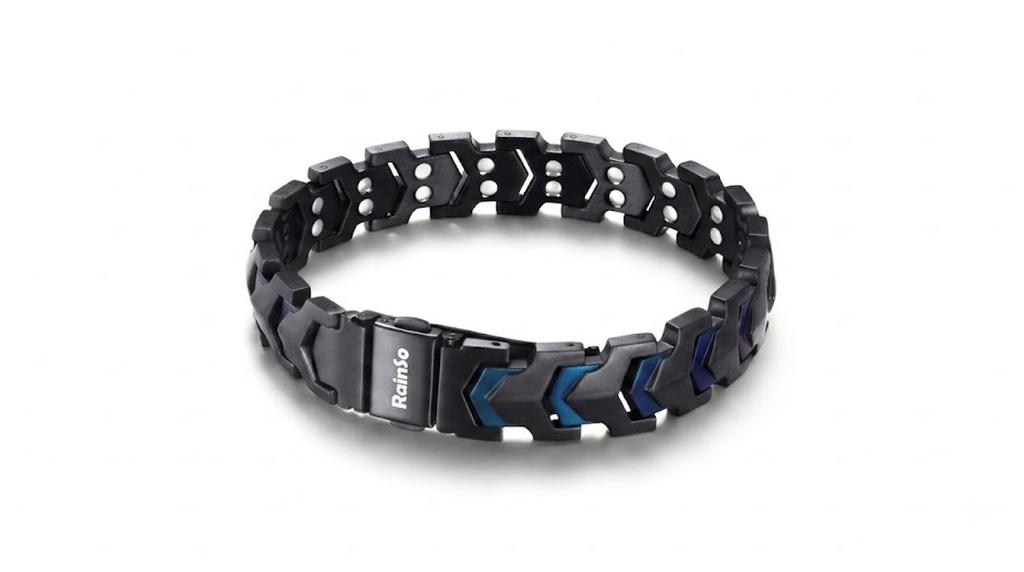
Angular links, V-shaped details and mixed matte finishes appeal to customers who want a bracelet that looks technical rather than traditional. The style works well in a display with other modern accessories or in an online collection aimed at a younger, style-led buyer.
Before ordering, check the clasp action, the weight on the wrist and whether the link edges are smooth. Ask how the magnet is positioned so it does not interfere with the shape of the bracelet. A strong design still needs to be comfortable.
2. Compass details for gift and travel counters
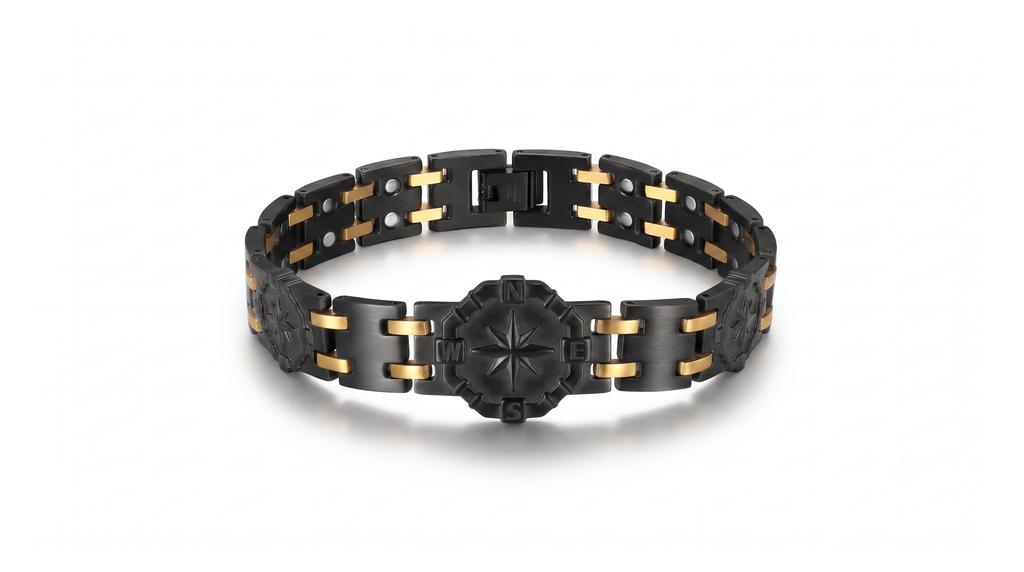
Compass dials, marine symbols and antique finishes give a product a story that is easy to explain at the counter. This direction often fits gift buying, travel themes and classic menswear, but it can also work in a unisex display.
Check the clarity of the engraving, the effect of the finish on the symbol and whether the colours are consistent across the batch. A detailed design can look different under shop lighting, so review a physical sample or detailed photos before committing to a larger order.
3. Natural inlay for texture-led displays
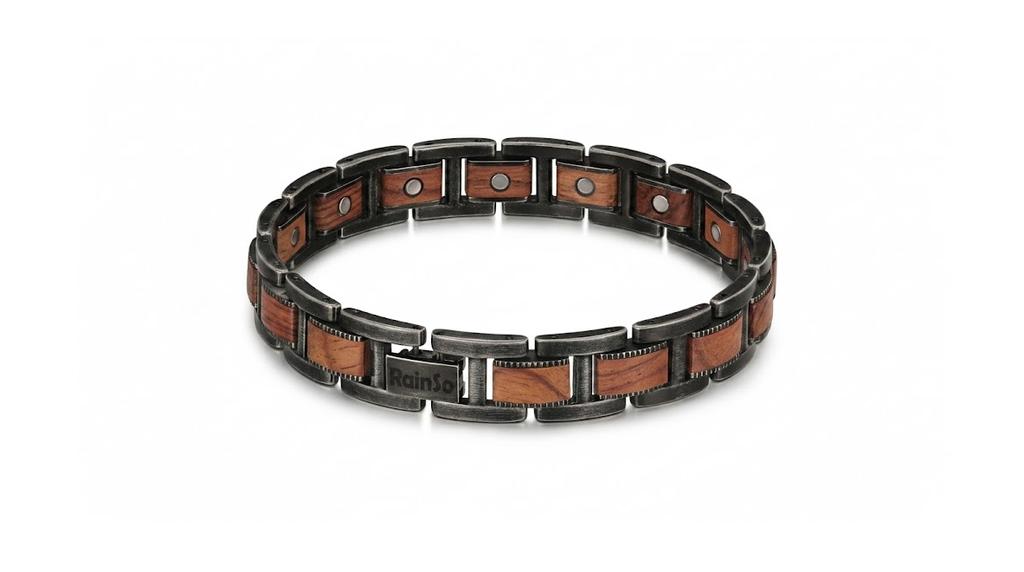
Wood-grain or stone-like inlays create contrast against metal and help a bracelet stand out without relying on bright colour. The style suits customers who prefer natural textures or a less uniform look. It can work in autumn and winter displays, gift sets or a boutique assortment with other mixed-material pieces.
Ask how the inlay is sealed, how it sits in the metal and what happens if it is exposed to water or daily handling. Inlays are a design feature; they should be considered part of the product specification and checked during inspection.
4. Embossed styles for dress and watch customers
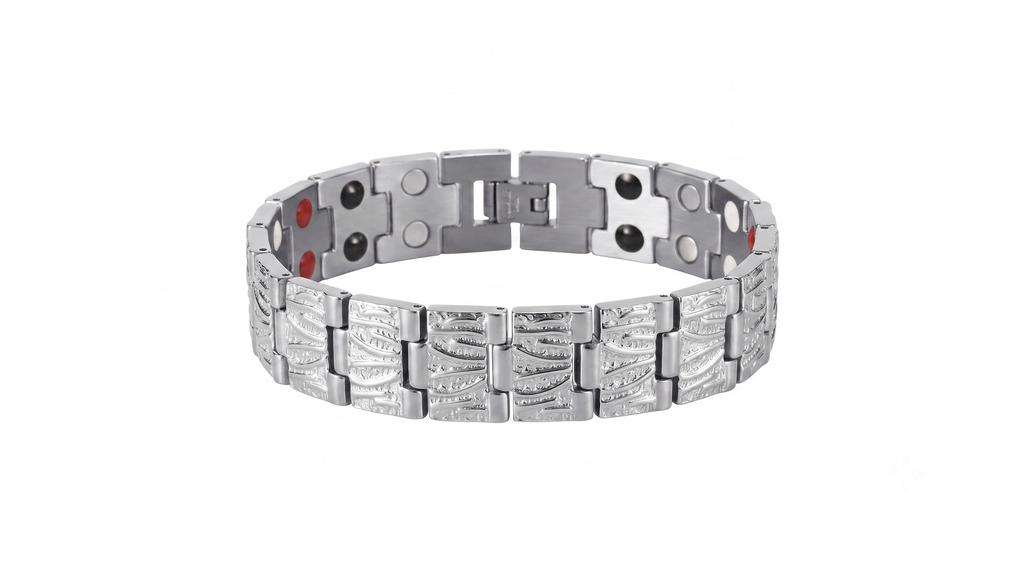
Geometric or relief patterns on polished steel can move a bracelet closer to a dress-watch look. This direction suits customers who already buy watches, leather goods or formal accessories. The product can sit in a higher display position when the finish and presentation support it.
Check the depth of the pattern, the polish around the edges and whether the surface shows handling marks easily. If the bracelet is sold as a gift, the packaging can matter as much as the piece itself.
5. Matte black for minimal, everyday ranges
A matte black finish with a simple link or low-profile clasp is easy to wear and easy to combine with other accessories. It can work for customers who want a discreet magnetic element without a traditional wellness look. The style is often a strong year-round retail option because it does not depend on a seasonal theme.
Before reordering, check the coating colour, edge coverage and how the finish responds to normal contact. Confirm the care instructions and explain them clearly to the customer.
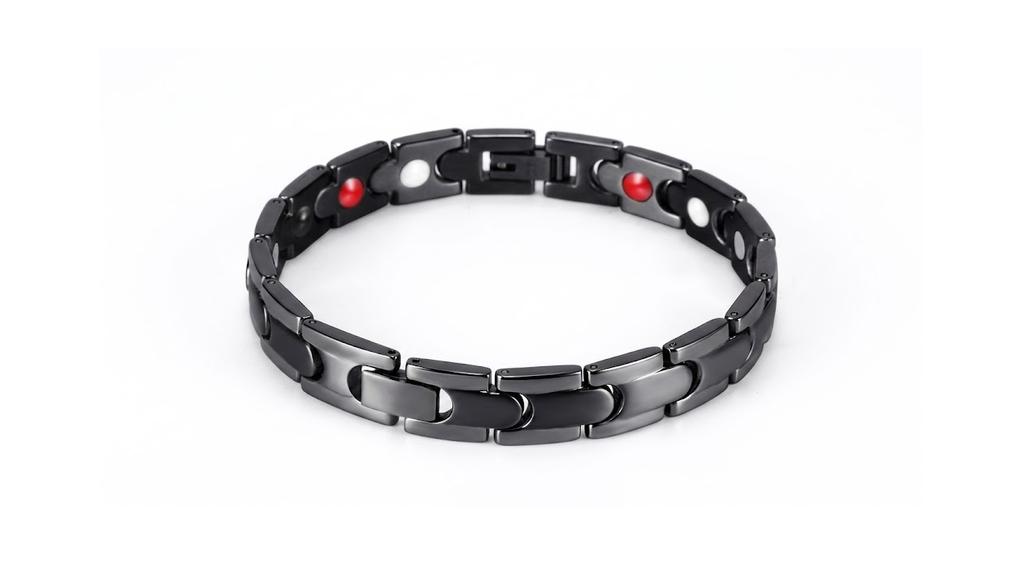
Balancing the first five-style buy
| Customer need | Possible style | What to test first |
|---|---|---|
| Everyday, casual | Matte link or simple adjustable band | Comfort, finish and easy sizing. |
| Gift purchase | Compass, heritage or natural inlay | Story, packaging and visual detail. |
| Dress or workwear | Embossed polished steel | Weight, edge finish and package quality. |
| Younger, style-led buyer | Arrow-link or mixed matte design | Clasp action, proportion and display appeal. |
| Low-risk repeat item | Classic link in a neutral finish | Consistency, size range and reorder record. |
Buying signals for the second order
Look at sell-through, not solely total sales. A style that sells quickly from a small display may deserve more space. A style that sells slowly but has a strong gift story may still be worth keeping in a smaller quantity. Returns and customer questions are also signals: if many customers ask how to adjust the size, the product may need a clearer size range or instruction card.
Keep the buying decision close to the sales floor or the online listing. The most suitable assortment is the one your team can explain, display and maintain without overstocking the first order. For magnetic bracelet styles that sell through quickly, keep a small reorder quantity rather than making a large second buy immediately.
For the stock-order route, see wholesale magnetic jewelry. The partnership overview explains when a custom route is a better fit.
Start with a small style mix, then use sell-through and customer questions to decide the next buy.
Build a test assortment